

Michael Sikorsky is CEO of Robots & Pencils.
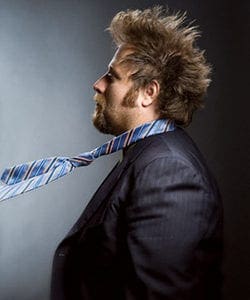
Michael Sikorsky
What’s the history of Robots & Pencils and how it was formed?
Sikorsky: The story of Robots & Pencils began shortly after I got the first iPhone at the launch in New York. All I could think about was how this could transform how we work, the same as the Internet had in the 1990s. And yet all people were saying was this was a toy that no one would care about.
One of my beliefs is that the key to success is having one very important truth no one believes but you, so my wife, Camille, and I started Robots & Pencils as a husband and wife team in 2009.
What does the company do?
Sikorsky: When we first created Robots & Pencils, we were focused on building mobile apps for our clients and products of our own. However, our vision for Robots & Pencils has always been to be a 100-plus-year-old company, which means we’ll continue to reinvent ourselves – the type of services we offer and the products we create.
Today, Robots & Pencils is a digital innovation firm, working with clients globally. We have helped build two digital banks, Varo and Xinja. In 2018, we also developed the platform for the 31st Human Right for Hu-manity.
Our core mission is to help future-proof our clients by being their Innovator of Record and help them realize the economic gains that great technological solutions provide.
Can you give me a sense of how the company has grown since its inception?
Sikorsky: Since launching in 2009, we’ve grown from a two-person startup to nearly 200 employees with a CAGR (compound annual growth rate) of 48 per cent. We have offices throughout North America and in the U.K., and work with clients across the globe – Australia, the Netherlands, the U.K., Canada, the U.S. and most recently, Bahrain.
Our 2014 expansion into the U.S. proved another good move, in my opinion. We have grown so that 60 per cent of our team is now U.S. based, with our major offices in Cleveland, Pittsburgh and Austin.
As you may have seen, Apple is planning on spending $1 billion on a new campus in Austin, so there will be many more amazing things to come.
What are your future plans for the company?
Sikorsky: When we created Robots & Pencils with the then-contrarian view that mobile would be more transformative than the Internet, our vision was to have a company that would last 100 years.
Today, we think we are entering the third phase of this technological revolution, which means there is plenty of opportunity to be had with new innovations and new markets.
Getting there means staying at the forefront of innovation. We have an internal process called FunLabs, a systemized approach to experimentation and innovation, to help us do this. In July, Slack acquired the first ever FunLabs project, Missions.
We fundamentally believe that innovation is not measured in square footage, so we are always seeking ways to dissociate this old way of thinking from ourselves and our clients.
You are an example of a tech company that is doing well here. There has been a lot of talk recently about the need for economic diversification in Calgary. Why is Calgary a good place for a tech company?
Sikorsky: Calgary has always been a city with an entrepreneurial spirit and a tolerance for taking calculated risk. And we have had some real homegrown technology success stories – James Gosling and Garret Camp are both U of C alums.
With the economic downturn, we’re looking to create more of those success stories, but the approach needs to be more focused on creating market cap and less on creating square footage.
The network effect from successful technology companies is incredibly powerful. Great technology companies typically beget great technology companies, and outside investment, talent and more follows. Calgary has many of the ingredients necessary to help foster this effect – we have built companies before.
It’s a wonderful city to live in and raise a family in and, by U.S. tech hub standards, it’s very affordable. What we really need to do is flip the script from thinking we need to have “big” companies to valuable ones or else we will continue to risk cutting the cord too soon.
– Mario Toneguzzi

The views, opinions and positions expressed by columnists and contributors are the author’s alone. They do not inherently or expressly reflect the views, opinions and/or positions of our publication.


0 Comments