

The Nissan Leaf still makes sense for city driving, but battery wear and charging constraints narrow its appeal fast
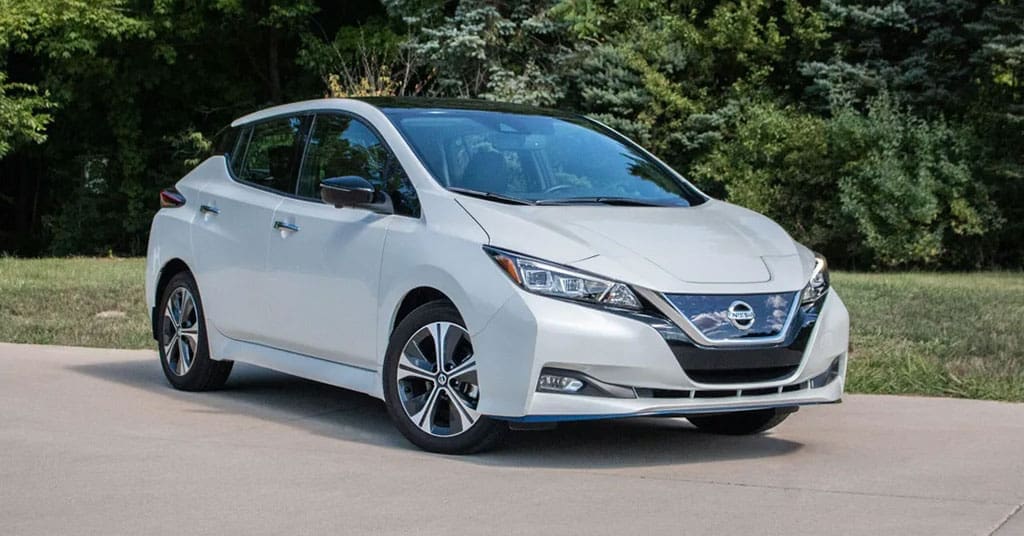
The Nissan Leaf’s compact hatchback design reflects its role as an urban-focused electric car.
The unravelling of government mandates pushing an all-electric future has left early electric vehicles flooding the used-car market, forcing buyers to judge them on practical merits rather than policy ambition.
The Nissan Leaf is one of the clearest examples of how that shift is playing out.
The Leaf was one of the first electric vehicles to gain real traction in Canada. Introduced in 2010 and now well into its second generation, it has become one of the most common EVs on the used market—and one of the most affordable ways to step into electric driving without buying new.
The 2020 model uses a 110-kilowatt electric motor producing 147 horsepower, driving the front wheels. Power comes from a 40-kilowatt-hour lithium-ion battery pack. Those numbers were respectable when new and remain more than adequate for city driving today.
Around town, the Leaf is nearly silent except for the mandated low-speed warning sounds when reversing. It’s unobtrusive, easy to drive and immediately responsive off the line.
What continues to surprise is the Leaf’s road manners. Unlike some electric cars that feel numb or detached, the Leaf drives much like a conventional compact hatchback. Steering is predictable, body control is decent and there’s enough power for confident merging and highway cruising. For commuting and errands, it never feels strained.
Inside, the cabin has aged reasonably well. Rear-seat space is generous enough for four adults, and the hatchback layout remains practical, though cargo space is somewhat compromised by battery packaging. Materials are functional rather than upscale, but nothing feels flimsy or poorly assembled.
The instrument display remains one of the Leaf’s better features. It clearly shows battery percentage, remaining range and regenerative-braking activity. It’s informative and easy to read, without the glitzy or cartoonish graphics found in some early EVs.
The climate-control system is less impressive. Finding the right balance of airflow and temperature takes some fiddling, and the air conditioning is serviceable rather than strong. It’s not a deal-breaker, but it reinforces the Leaf’s role as basic transportation rather than a premium offering.
For used buyers, the critical issue is range.
When new, the 2020 Leaf carried a rated range of roughly 350 kilometres. Today, that number should be treated as optimistic. Battery degradation varies depending on climate, charging habits and mileage, but buyers should expect reduced real-world range compared with factory claims.
Canada’s public charging network has expanded in recent years, but coverage remains uneven, particularly outside major urban centres and along secondary highways. That reality magnifies the practical impact of reduced range for many Canadian drivers.
Range isn’t the only concern for used Leaf buyers. Over time, a few long-term reliability issues have emerged that are worth flagging.
Battery health remains the biggest variable. While routine maintenance is minimal compared with a gasoline car, battery degradation can significantly reduce usable range, particularly on vehicles that have seen frequent fast charging or extreme temperatures.
Some 2019 to 2020 Leafs were also subject to recalls related to the fast-charging system, with concerns about battery overheating during repeated direct current (DC) fast-charging sessions. Buyers should confirm that all recall work has been completed.
Owners have also reported occasional electrical quirks, including charging-system warnings and minor software glitches. These are typically intermittent rather than catastrophic, but they reinforce the importance of a full diagnostic scan before purchase.
The upside is simplicity. With no engine, transmission or exhaust system, routine maintenance is mainly limited to tires, brakes and coolant checks. Just be aware that battery-related repairs, if needed outside warranty, can be expensive. A new battery pack typically costs $10,000 to $15,000, plus labour, putting total replacement costs as high as $18,000. Remanufactured packs can be cheaper, but availability and warranty coverage vary.
Charging speed hasn’t improved with age. On a standard 110-volt household outlet, charging is painfully slow. An overnight plug-in may recover only a modest amount of range. Level 2 home charging is effectively a requirement if you want to own a Leaf without constant frustration.
This leads to the Leaf’s enduring limitation: range anxiety. Even when new, longer trips required careful planning. As a used vehicle with diminished range, that constraint becomes more pronounced. Road trips still mean hopping from charging station to charging station, and any disruption, such as out-of-service units, detours or bad weather, can quickly unravel plans.
That mental burden hasn’t gone away.
Our verdict
The Nissan Leaf can make sense today as a used car, but only as a city-focused commuter. Limited range, slow charging and the potential cost of battery replacement rule it out as a flexible, go-anywhere vehicle. Buyers who understand those limits and price the risk accordingly may find value, but this is not an EV for drivers who need range or spontaneity.
| Auto Desk
Explore more on Nissan, 2020 Car review
The views, opinions, and positions expressed by our columnists and contributors are solely their own and do not necessarily reflect those of our publication.
Troy Media empowers Canadian community news outlets by providing independent, insightful analysis and commentary. Our mission is to support local media in helping Canadians stay informed and engaged by delivering reliable content that strengthens community connections and deepens understanding across the country.

0 Comments