

Mitsubishi fixed what mattered and left everything else alone
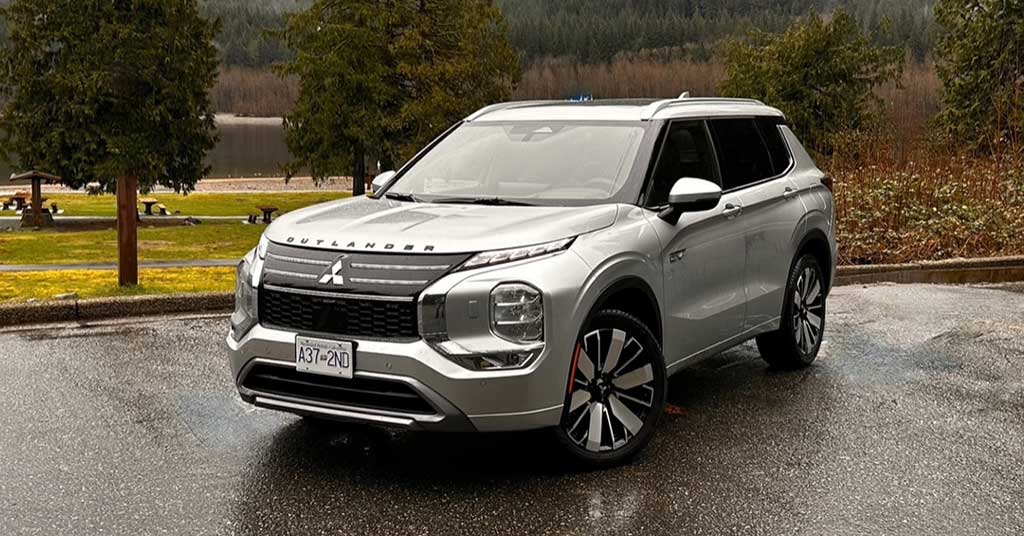
There’s a lot on the line when an automaker tinkers with its best-selling vehicle that is also the market segment leader. Sit still and the competition will move past you. Change it too much and buyers may be put off and shop elsewhere. Mitsubishi has updated the 2026 Outlander PHEV without changing what made it Canada’s best-selling plug-in hybrid.
The Outlander PHEV has been Canada’s top-selling plug-in hybrid, whether sedan or SUV, for the past three years, so Mitsubishi had every reason to improve it carefully rather than start over. Unlike a conventional hybrid, a plug-in hybrid can be recharged from an electrical outlet and driven on battery power alone before the gas engine takes over.
The Outlander, available in both gas and PHEV versions, is Mitsubishi’s best-selling model. Last year, there were 37,355 Mitsubishis sold in Canada, and more than half of them, 21,587, were Outlanders. Of those, 8,899 were PHEVs.
After updating the gas-powered Outlander last year, Mitsubishi has now applied many of those changes to the Outlander PHEV.
The styling updates are subtle: a revised front grille and bumper, updated taillights, a redesigned centre console with a larger armrest and more storage, a larger 12.3-inch navigation screen and revised transmission and drive-mode controls.
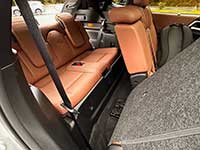
The cabin is quieter, and the redesigned centre console provides more storage while the larger armrest adds to the comfort.
Within the first few kilometres, the improvements become obvious. Less road noise reaches the cabin, wind noise is well controlled at highway speeds and the suspension absorbs rough pavement with greater composure. The Outlander feels more refined without losing the character that helped make it successful.
The main reason for buying the PHEV instead of the gas version remains lower operating costs. Mitsubishi has increased the electric range, improved efficiency and added power.
Electric-only range is now 72 km, an 18 per cent increase. Using both its electric motors and gas engine, the total driving range increases to 690 km. Combined fuel economy is rated at 3.2 Le/100 km, while gas-only consumption is 8.6 L/100 km. A new 22.7-kWh battery also delivers stronger acceleration.
For many Canadians, 72 kilometres of electric range is enough to handle a typical day’s commuting without using any gasoline. Charge overnight at home and many owners could drive to work, run errands and return home before the gas engine is needed. Longer trips remain as straightforward as they are in a conventional SUV.
The added power is immediately apparent. Instant torque from the electric motors provides brisk acceleration from a stop, while passing slower traffic requires little effort. The transition between electric and gas power is smooth enough that many drivers won’t notice when the engine starts.
On rain-soaked highways, gravel roads and snow-covered streets, Mitsubishi’s Super All-Wheel Control system delivers the sure-footed feel Canadian drivers expect from an all-wheel-drive SUV.
Unlike most plug-in hybrid SUVs, the Outlander continues to offer a third row of seats. It’s best suited to children or small adults, but for families that occasionally need seating for seven, it’s an advantage that the Toyota RAV4 Prime, Hyundai Tucson PHEV and Kia Sportage PHEV don’t provide.
Prices start at $49,998 for the base ES trim, which qualifies for the current federal $2,500 incentive on eligible plug-in hybrid vehicles. There are seven trim levels, with the Noir topping the lineup at $63,048.
To me, the most impressive improvement is the sound system. The doors now function as speaker enclosures using damping material, added stiffening and additional welds to reduce vibration. Upper trim levels receive the 12-speaker Yamaha Ultimate system, which was fitted to my test vehicle.
I listened to everything from oldies and jazz to country and today’s hits on SiriusXM. Familiar songs sounded richer and more detailed than I expected. Bass is strong without overwhelming the music, vocals are exceptionally clear and the high notes remain crisp even at higher volume. It’s the best factory sound system I’ve heard in a vehicle.
Automakers often stumble when updating a segment leader. This time, Mitsubishi hasn’t. It improved the Outlander PHEV where owners will notice it most: electric range, refinement, efficiency and everyday usability. Those measured changes should keep the Outlander PHEV at the front of Canada’s plug-in hybrid market for some time to come.
My Verdict:
The 2026 Mitsubishi Outlander PHEV proves that careful evolution can be better than a complete redesign. With more electric range, improved refinement and everyday practicality, it builds on the strengths that have already made it Canada’s best-selling plug-in hybrid. Buyers looking for an efficient, comfortable SUV that handles daily commuting on electric power without sacrificing long-distance capability will find plenty to like.
Dale Johnson is an award-winning author, broadcaster and journalist who has worked in TV, radio, print and online. While the manufacturer provided Dale with a vehicle to test drive, the content of this review was not reviewed or accepted by the manufacturer.
Explore more on Car reviews, Mitsubishi, Automotive technology, Consumer information
The views, opinions, and positions expressed by our columnists and contributors are solely their own and do not necessarily reflect those of our publication.
Troy Media empowers Canadian community news outlets by providing independent, insightful analysis and commentary. Our mission is to support local media in helping Canadians stay informed and engaged by delivering reliable content that strengthens community connections and deepens understanding across the country.

0 Comments